Case study
Designing with AI for Salesforce
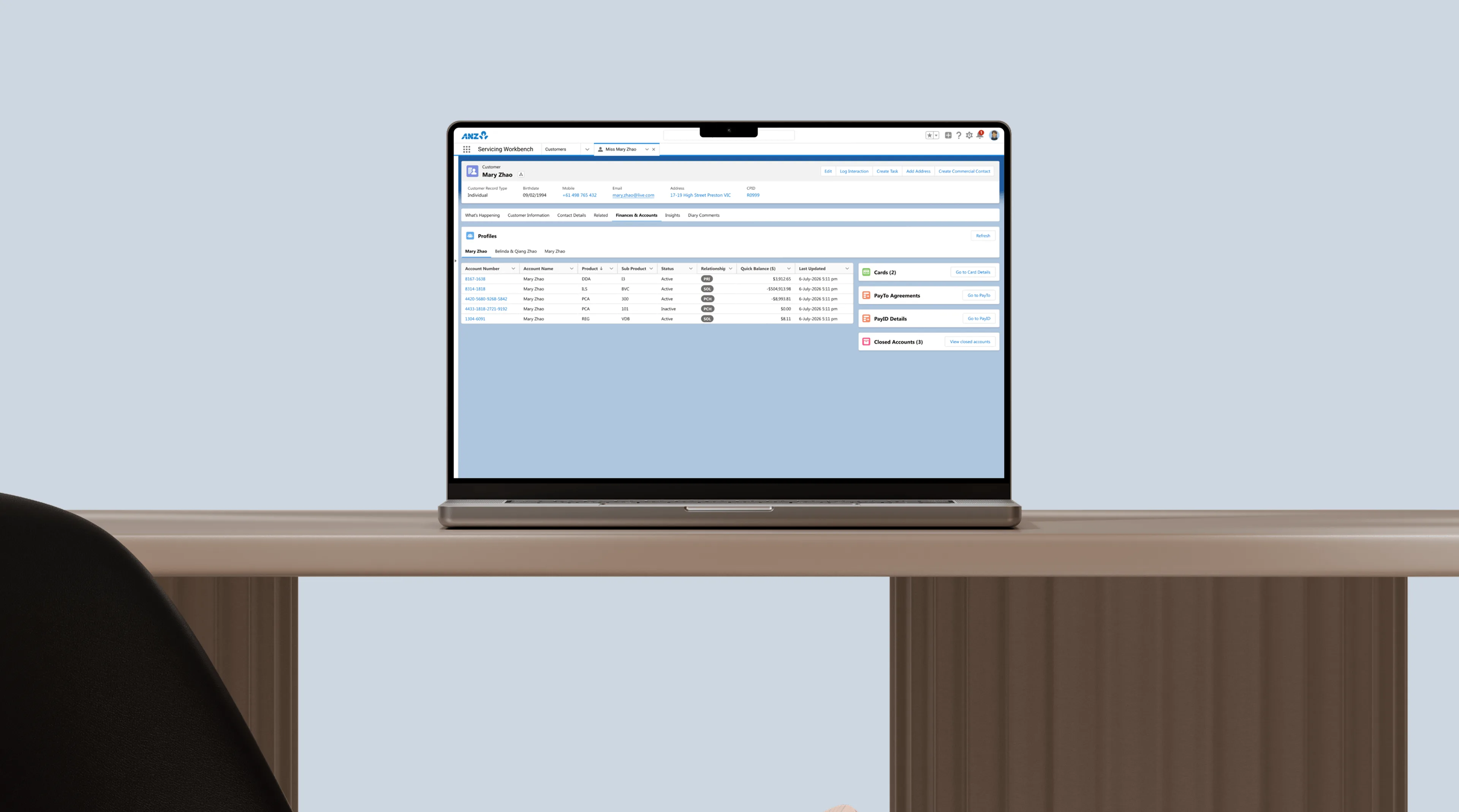
ANZ required an internal tooling transformation for business banking staff transitioning to Salesforce. Using native AI-assisted development tools, I'm building real proofs-of-concept as the quickest way to get an experience in front of the users.
Client
ANZ
Project duration
12 Months (Ad hoc)
Deliverables
- Experience concepts
- Journey maps
- Research findings
- Established focus group, structure and cadence
- Design principles
My contribution
- Led discovery activities
- Led experience design
- Own and facilitate user research
- Formation of Banker Focus Group
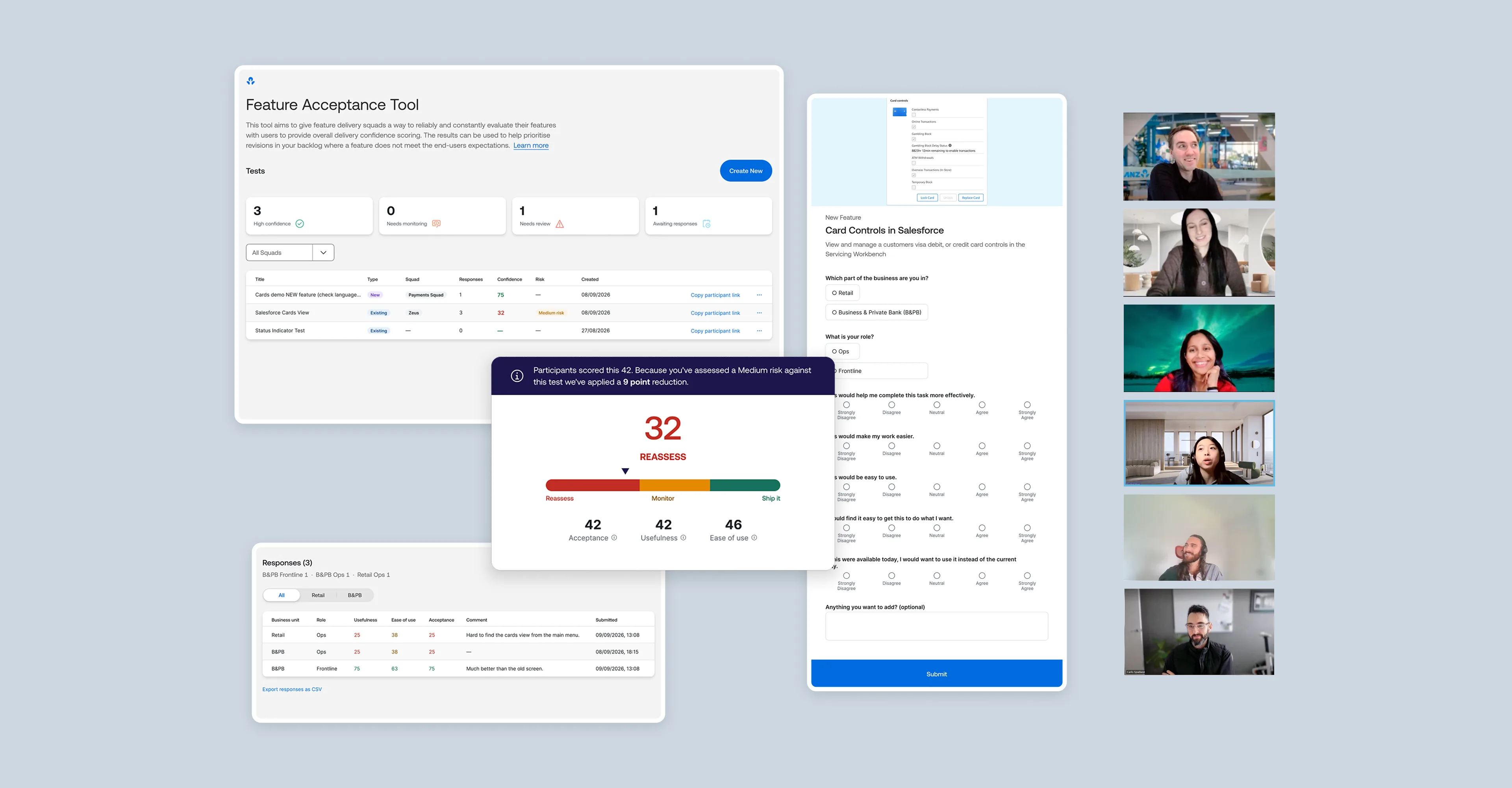
- Designed and built an internal feature acceptance tool with AI
Problem / Challenge
Business banking staff currently navigate a raft of complexity, multiple systems, complex workflows. ANZ was looking to transition workflows to streamlined Salesforce workbenches giving staff a single view of the customer. Despite requirements being fairly mature, they were effectively constrained to rebuilding what already existed over pursuing opportunities for tactical quality of life improvements. The squads also had poorly defined success criteria. Some teams demonstrated a disconnect when linking the broader strategy to the outcomes they hoped to deliver.
Approach
Initially I networked internally to find all avenues to directly engage with bankers, while I worked on gaining endorsement for a regular cadence with frontline staff for both generative and evaluative feedback.
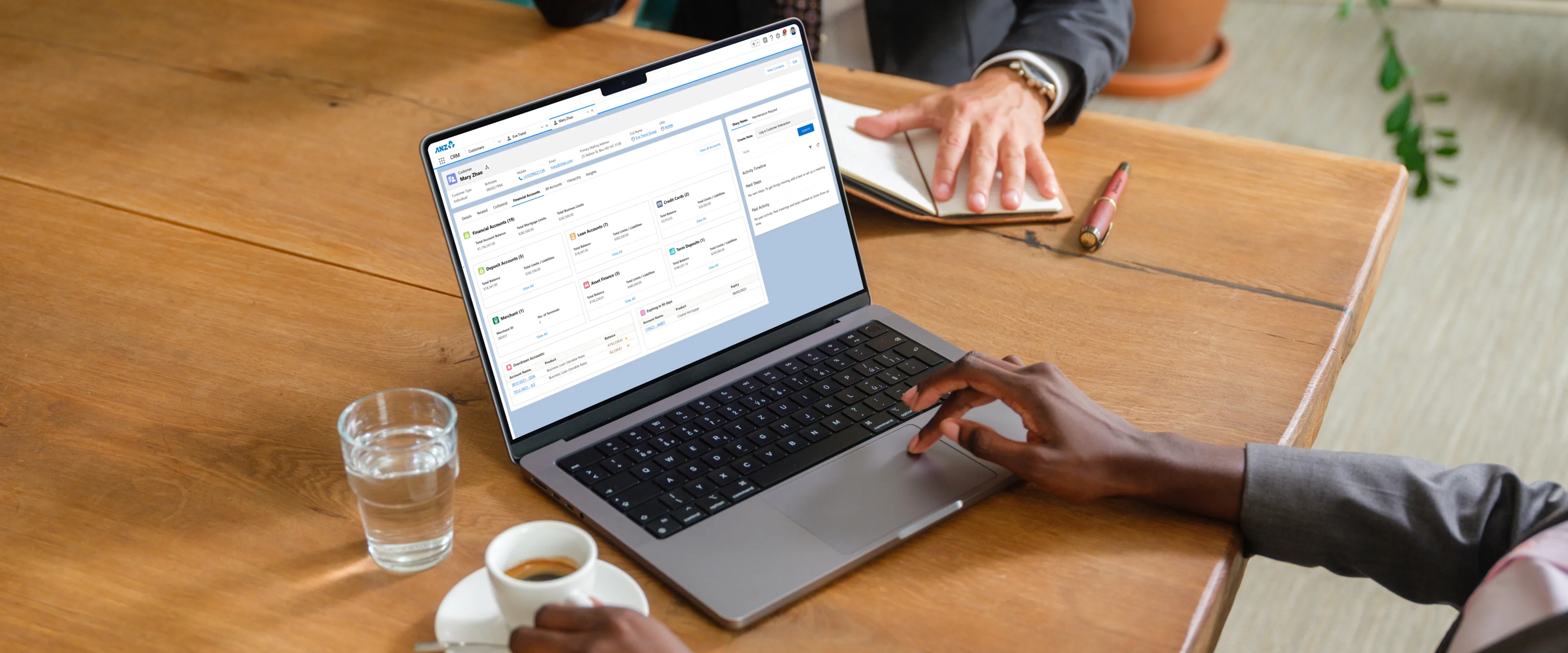
Focus groups surfaced real insights: like a signal they weren’t struggling to find attributes or screens, their workflow was fast, and fluid, they were looking for signals, defaults, conduct flags, expiring accounts and anything that could kill a deal hours after the work of preparing it. Something that could be better serviced by account views that supported two-tier views. High order signals on a summary view and more granular attributes one level down.
The tools I use have changed more than the process has. Now, pairing Salesforce AI-Native Development Tools and Claude Code, I can build more tactile, component-correct environments rather than static screens (or prototypes). Achieving the same degree of fidelity (or complexity) in code is much quicker to produce than its Figma counterpart used to be. It’s easier to share with stakeholders, and live demos can communicate more richly and deeply with engineers to boot.
As the delivery scaled across multiple squads shipping concurrently, the squads owned their feature testing, but lacked a common approach or measurement. Testing was also exclusively conducted by me, risking unnecessary bottlenecks. I opted to build a simple tool with AI to give every squad a common language for feature acceptance testing. Feature owners can create a simple test in a few clicks, participants answer a short survey grounded in an established framework (TAM - Technology Acceptance Model) scoring usefulness, ease of use and acceptance. Coupled with an optional risk score, teams can see a live dashboard ranking Delivery Confidence Scores per feature so they can see at a glance what to ship and what to prioritise.
Outcome
The focus group proved to be an effective way to validate the suitability of features, which drove the curation and prioritisation of the backlog for committed enhancements beyond the day one scope. The workbench shipped to around 400 bankers and is continuing to grow today.
The Delivery Confidence tool is still early. It’s built, and I’ve validated there’s a real appetite to adopt it, but I am still in the process of getting it whitelisted internally for teams running it day to day. What I can confidently stand behind is the instinct behind it, and the ability for AI tooling to enable people with a solutions mindset to identify what is true, and test AI to prove it out or create a fix.