Case study
Digitising Pathology Referrals
A multi-phase engagement to help modernise the delivery of pathology services with a national healthcare diagnostics provider.
Client
National Healthcare Diagnostics Provider (Confidential)
Project duration
6 Months
Deliverables
- Mobile Website
- Desktop Web App
- Design System
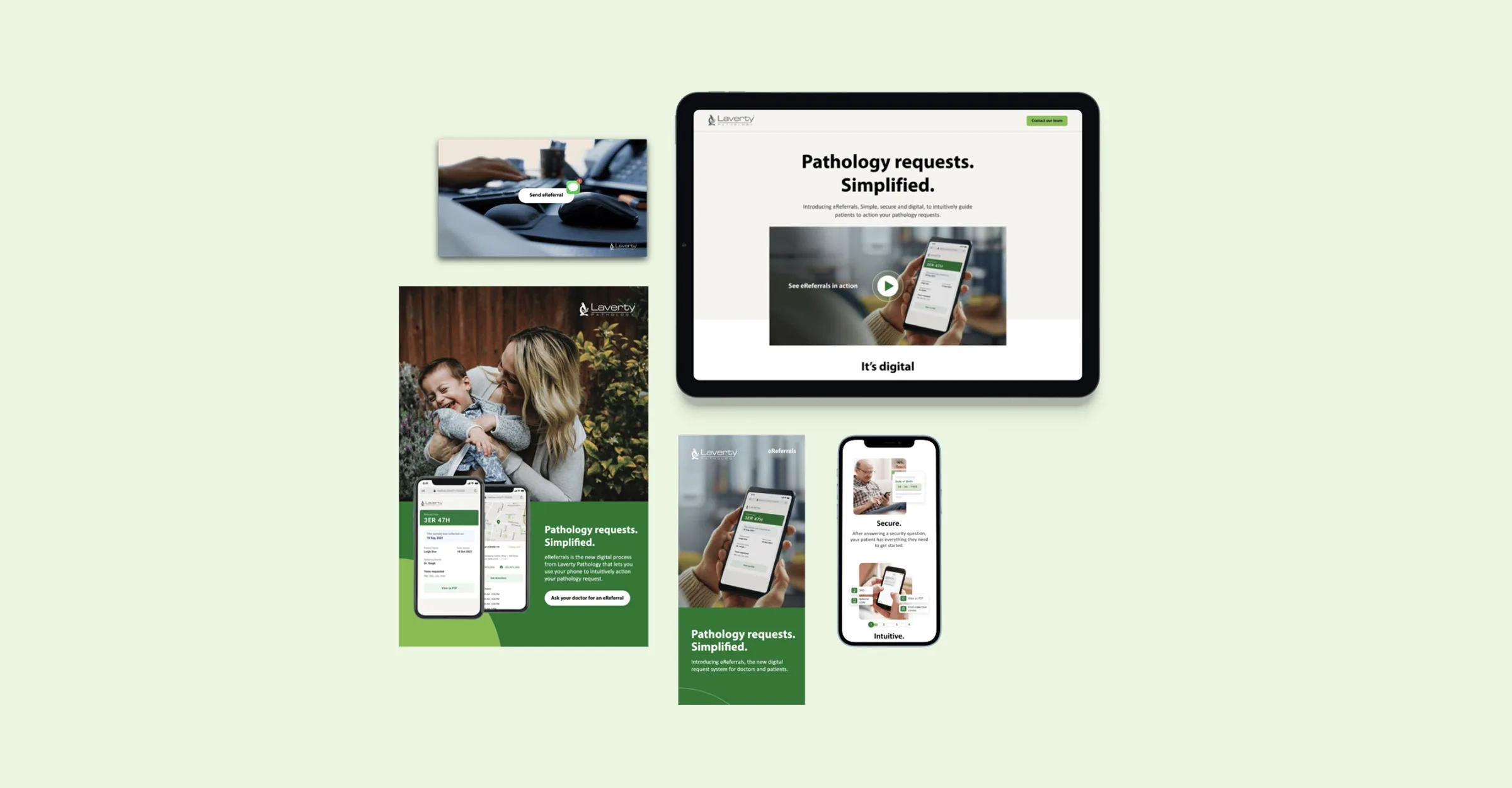
- Marketing Collateral
- Training manuals
My contribution
- Created foundations to a multi-brand Design System
- Workshop facilitation
- Concept development
- Customer research
- User testing
Problem / Challenge
The business’s read was simple: falling referral volume, a leakage problem. The reality was actually multiple systems discretely failing across the journey.
- The telehealth consultations half as likely to convert to a completed referral as face-to-face ones.
- Referrals were printed, scanned, and emailed with no visibility into how many even landed.
- Phlebotomists were handling a complex, unpredictable collections caseload with almost no support: no case visibility, thin training and patients arriving unprepared.
Approach
Discovery across the diagnostic journey with doctors, collection centres and patients surfaced insights that were used to shape two connected deliverables:
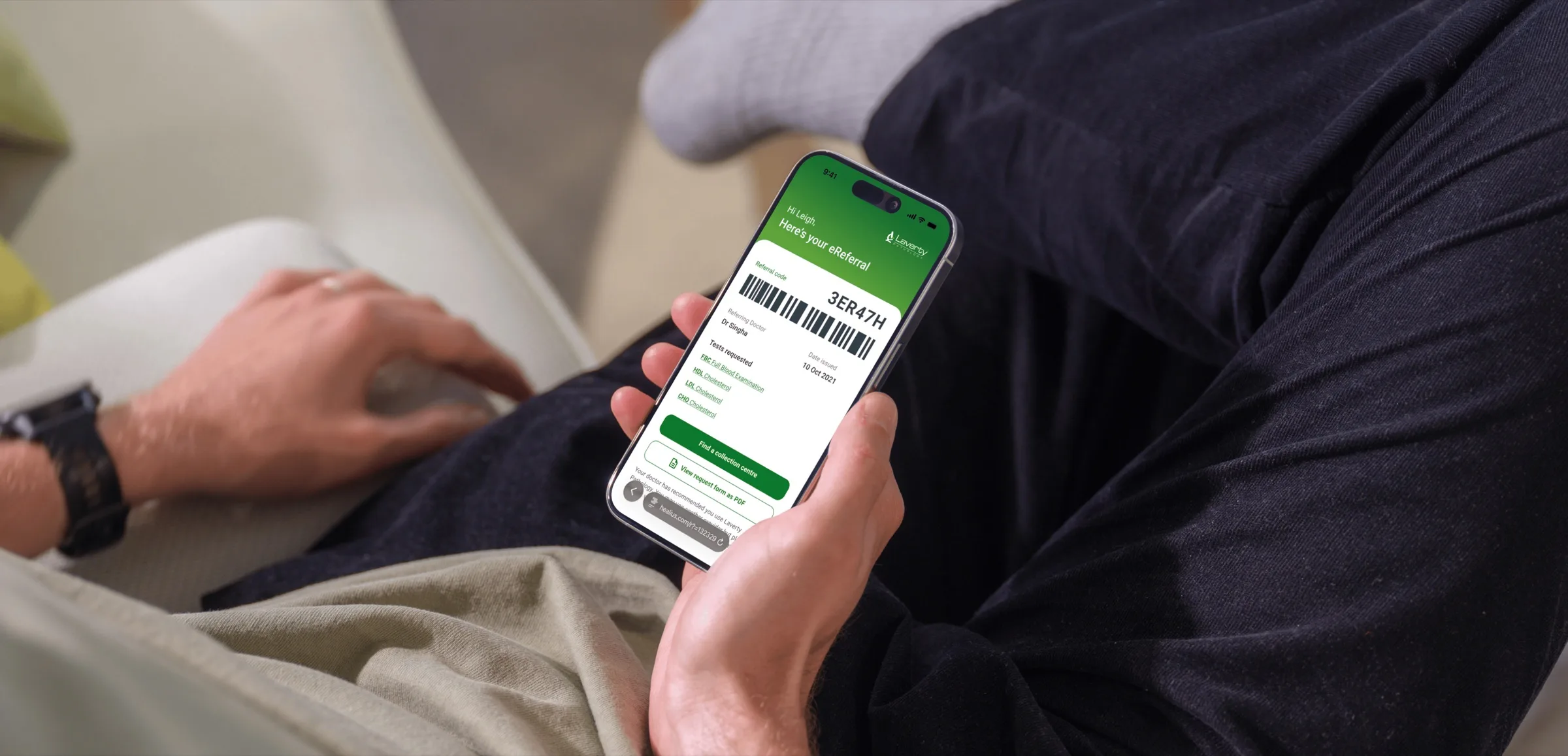
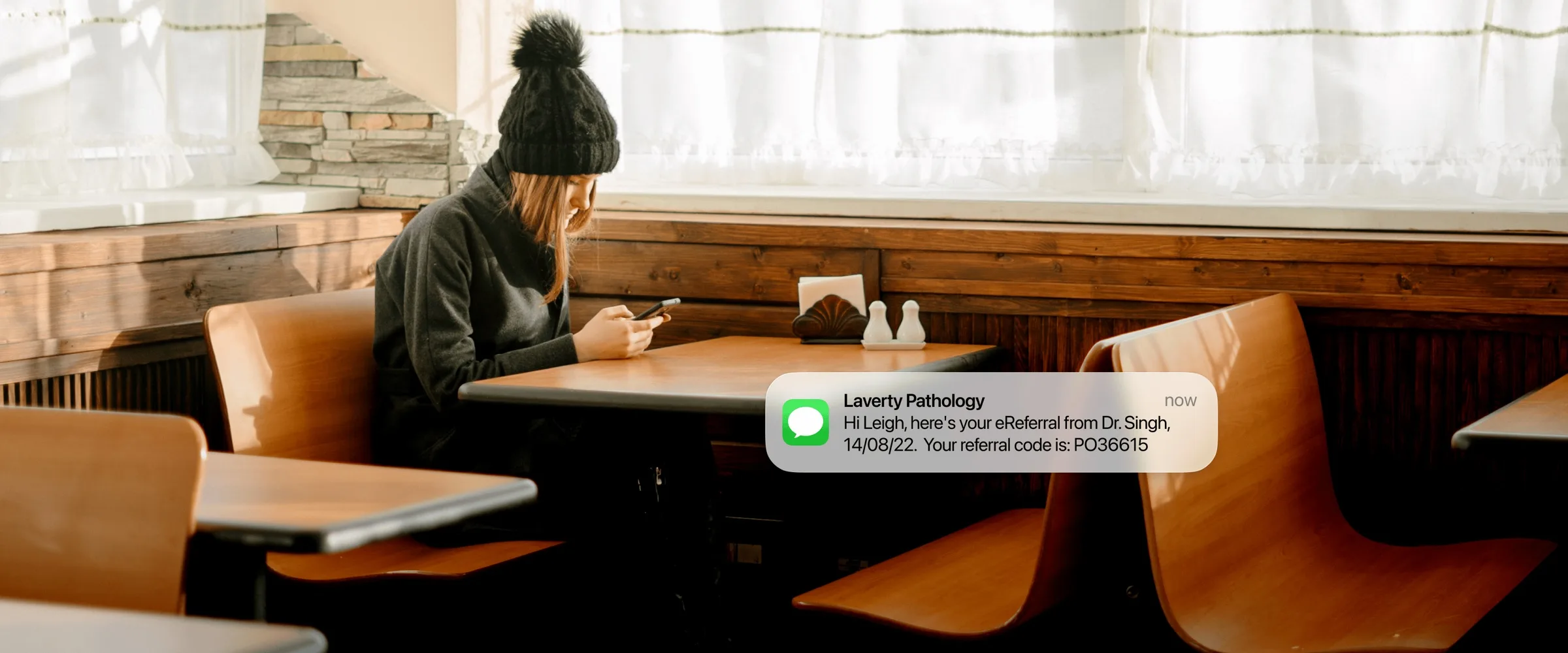
- A digital referral issued straight from the GP’s system to the patient’s phone replacing the print-scan-email chain; and
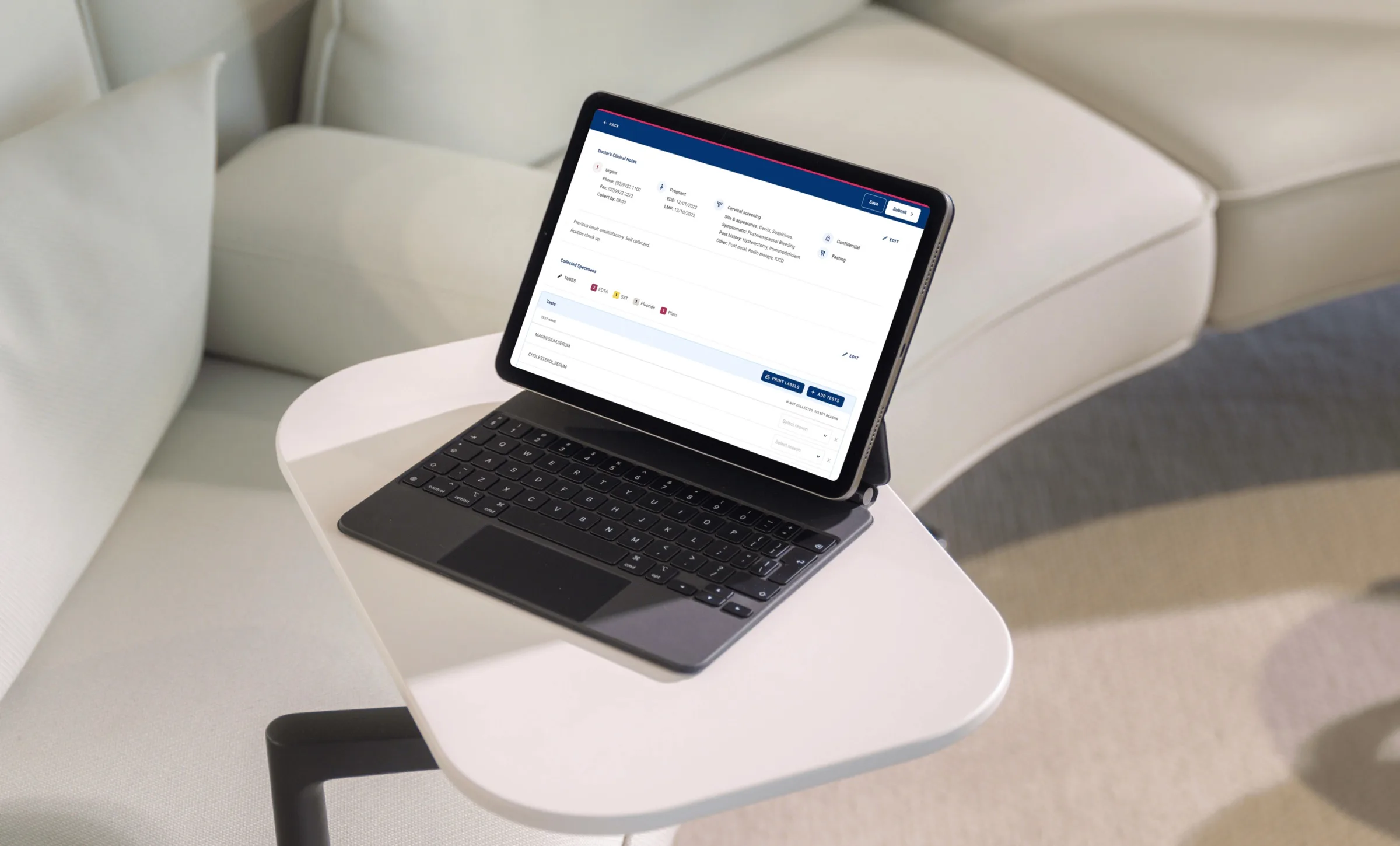
- A collections portal which provided staff tools paper-based tests never could. This resulted in no more handwritten labels, tube-by-tube draw order specific to the test panel, and accompanying test reference manual.
Testing revealed:
- That eReferrals had to work via SMS (not email or digital links) for patients without reliable data, with the code visible in the message itself.
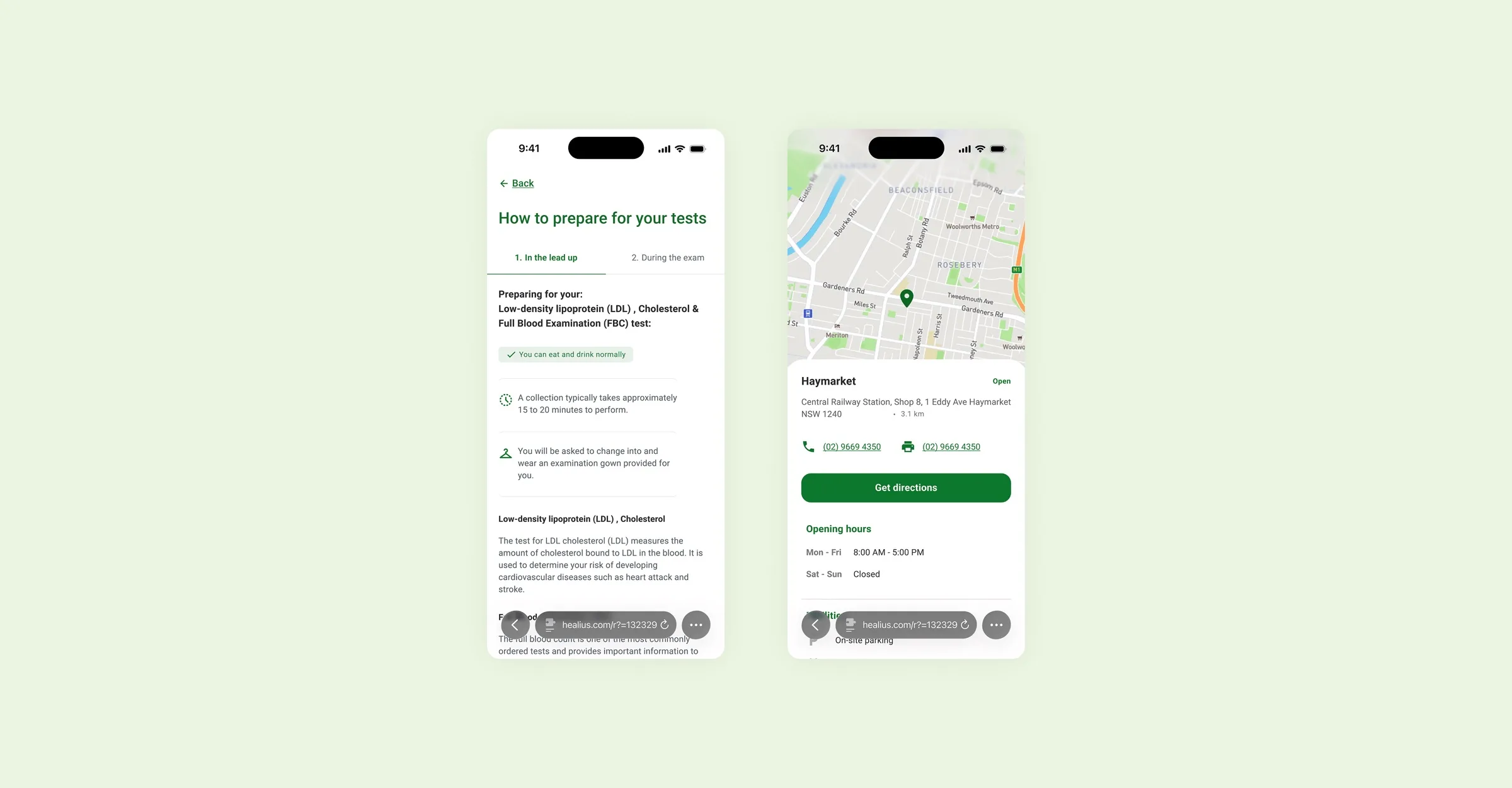
- Patients also wanted to better understand the tests they’d been prescribed, not just receive them. That pushed the e-referral’s scope beyond delivery, into richer test information that included clearer prep instructions to help patients get ready for collection.
Outcome
A broad and ambiguous brief turned into a specific answer for the people writing referrals, patients, and the people standing in a small room all day drawing blood with sore hands and no computer. The work reached a phlebotomist and patient validated and pilot-ready proof of concept which was handed to the client’s internal teams to implement with a set of digitally mature centres lined up to pilot it.